RAMMED EARTH
We are always interested in looking at sustainable and innovative building materials throughout our work. When specifying materials for our garden for Chelsea Flower Show in 2025, rammed earth was a perfect building material for this. We wanted a building method that felt rooted in tradition yet be innovative and one we could see ourselves returning to time and time again. Rammed earth is strong, long lasting, fire and pest resistant, has good thermal mass stabilising indoor temperatures as well as acoustic damping. It has excellent sustainability credentials as there is very little waste and the materials can come directly from the site it will be constructed on.
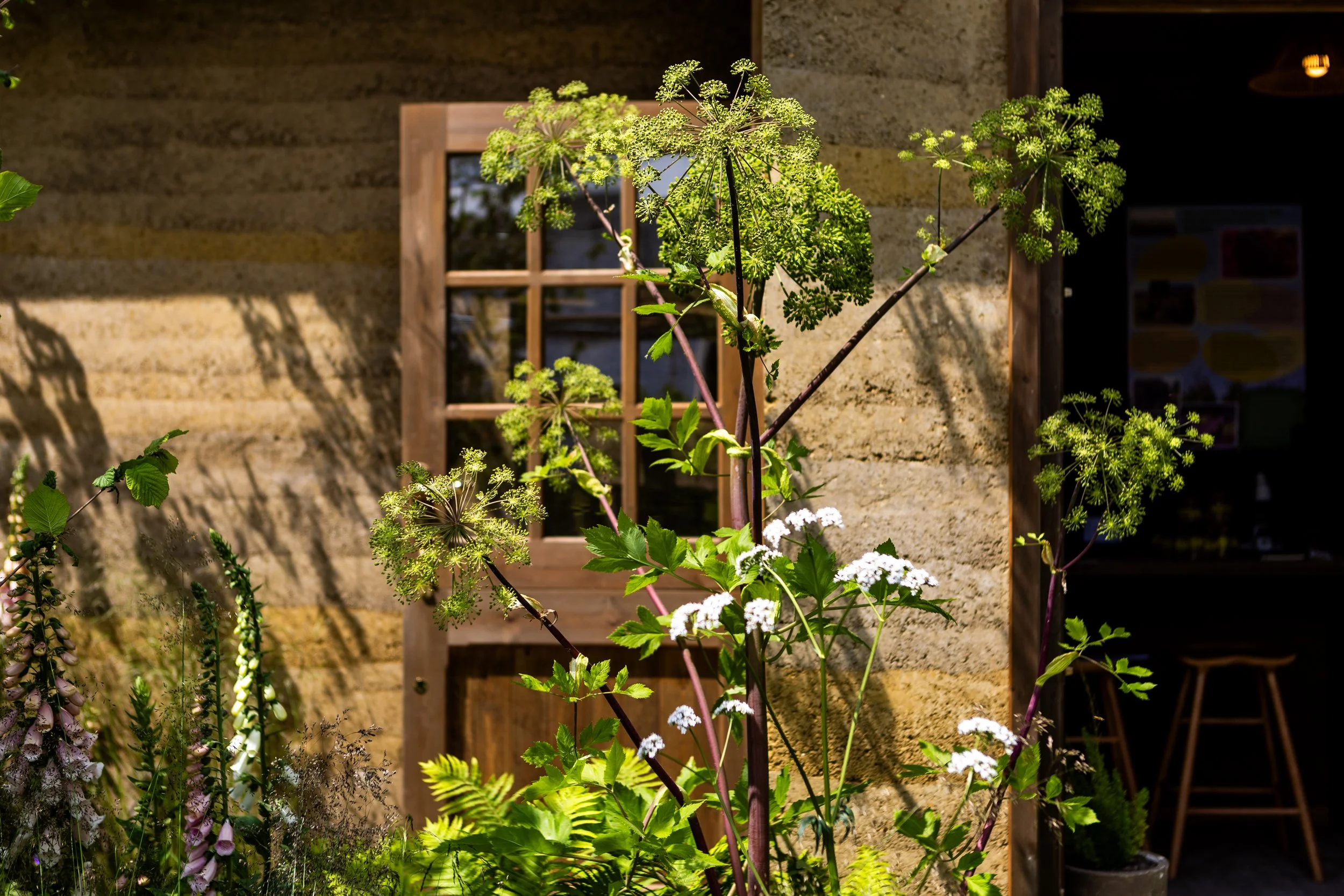
WHAT IS RAMMED EARTH
there are two main types of rammed earth:
Stabilised (with cement or other stabilisers )
or
un-stabilised (without cement or other stabilisers)
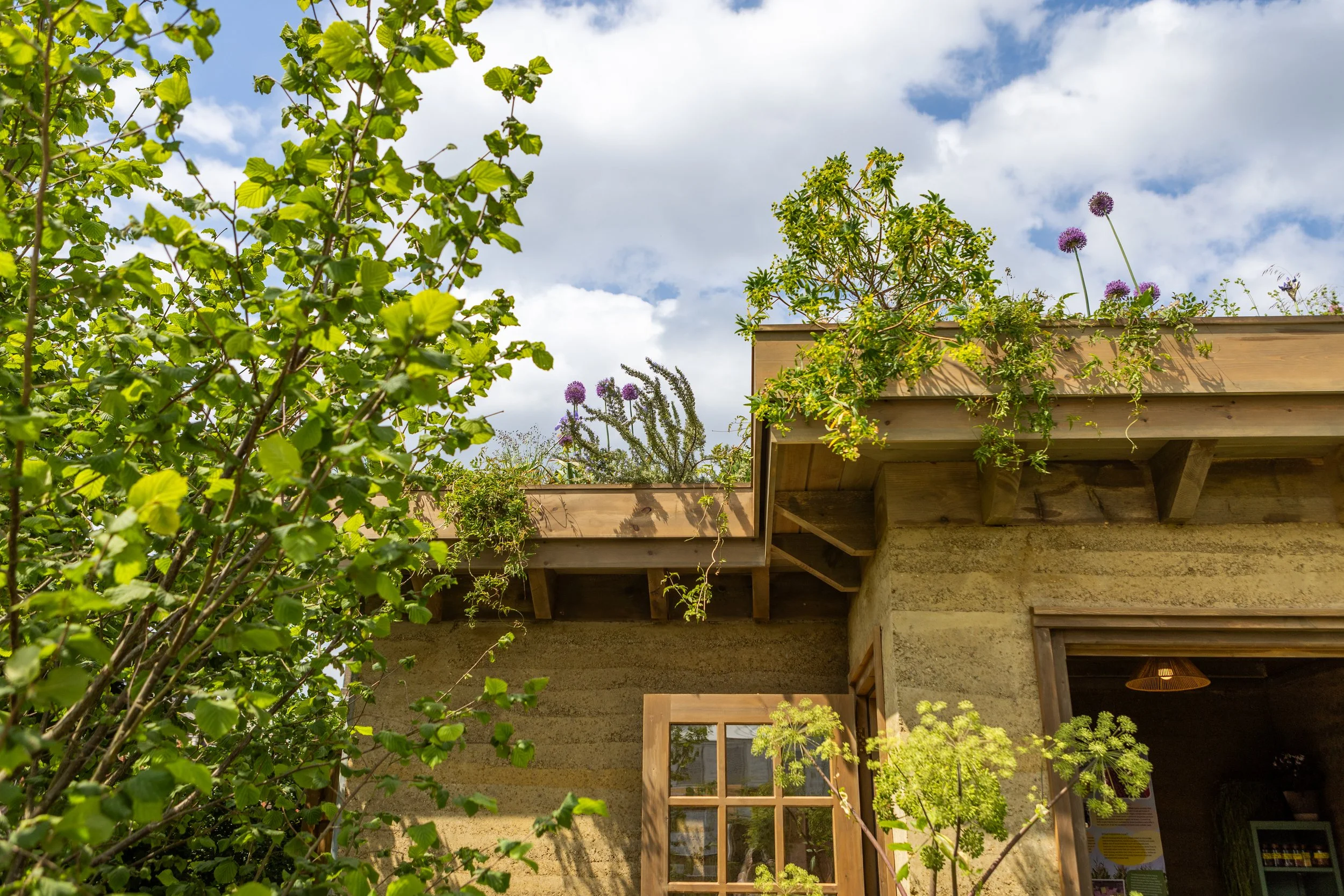
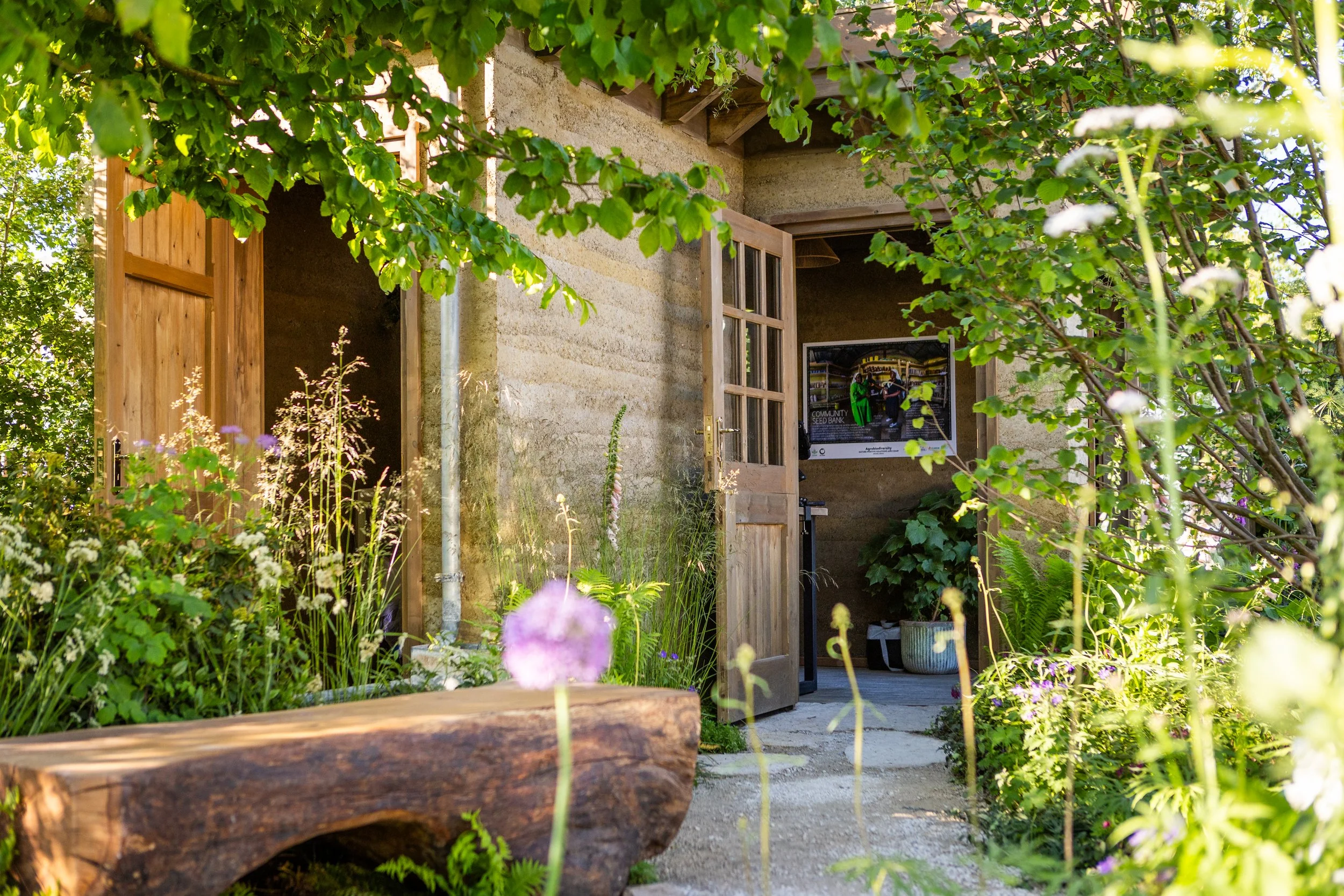
Both do serve a purpose and each have their benefits. We aim to use unstablised where possible, for our Chelsea show garden in 2025 (Garden of the future) we used unstabilised to create a building with a semi-intensive green roof on top which easily stood up to the challenge and was awarded gold medal. By not needing to include cement it lowered the carbon used and meant the building could be taken down and rebuilt, or even used as mulch.
Both are built in the same way, the rammed earth is put into a form work then compacted in layers of about 150mm that compact down to around 100mm.
What is the mix of rammed earth made from?
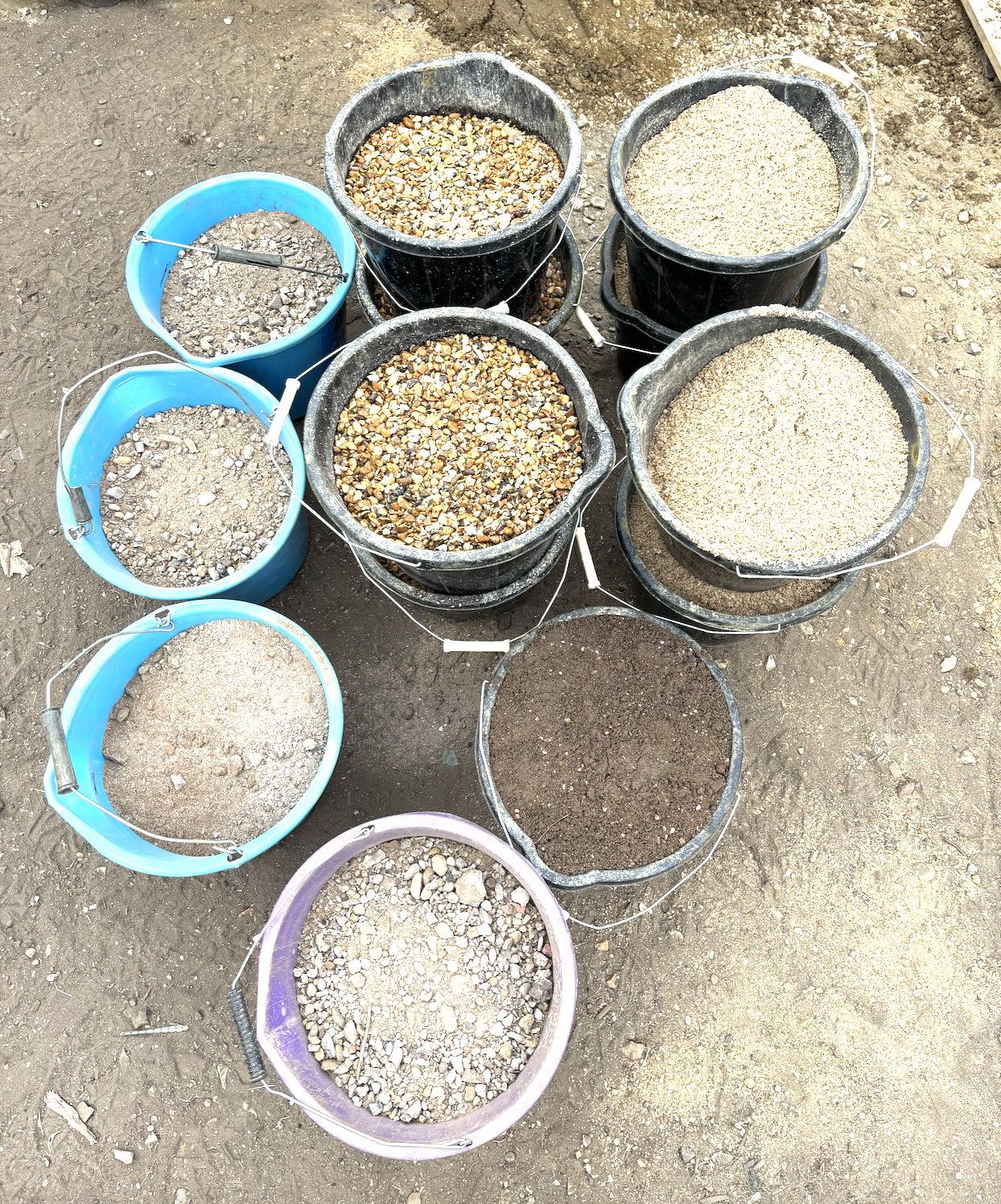
Each mix needs to be precise and tested fully before any large structures are created to make sure the grading of materials is correct, so it locks together when compacted. However an outline of the materials are:
Recycled aggregates 20mm-Dust
10mm shingel
Powered Clay
Soil with high silt content
If stabilised, cement will need to be added and clay reduced.
TESTING
The test below was a series of different mix ratios to find the best strength of mix, these were sent off to a strength test lab.
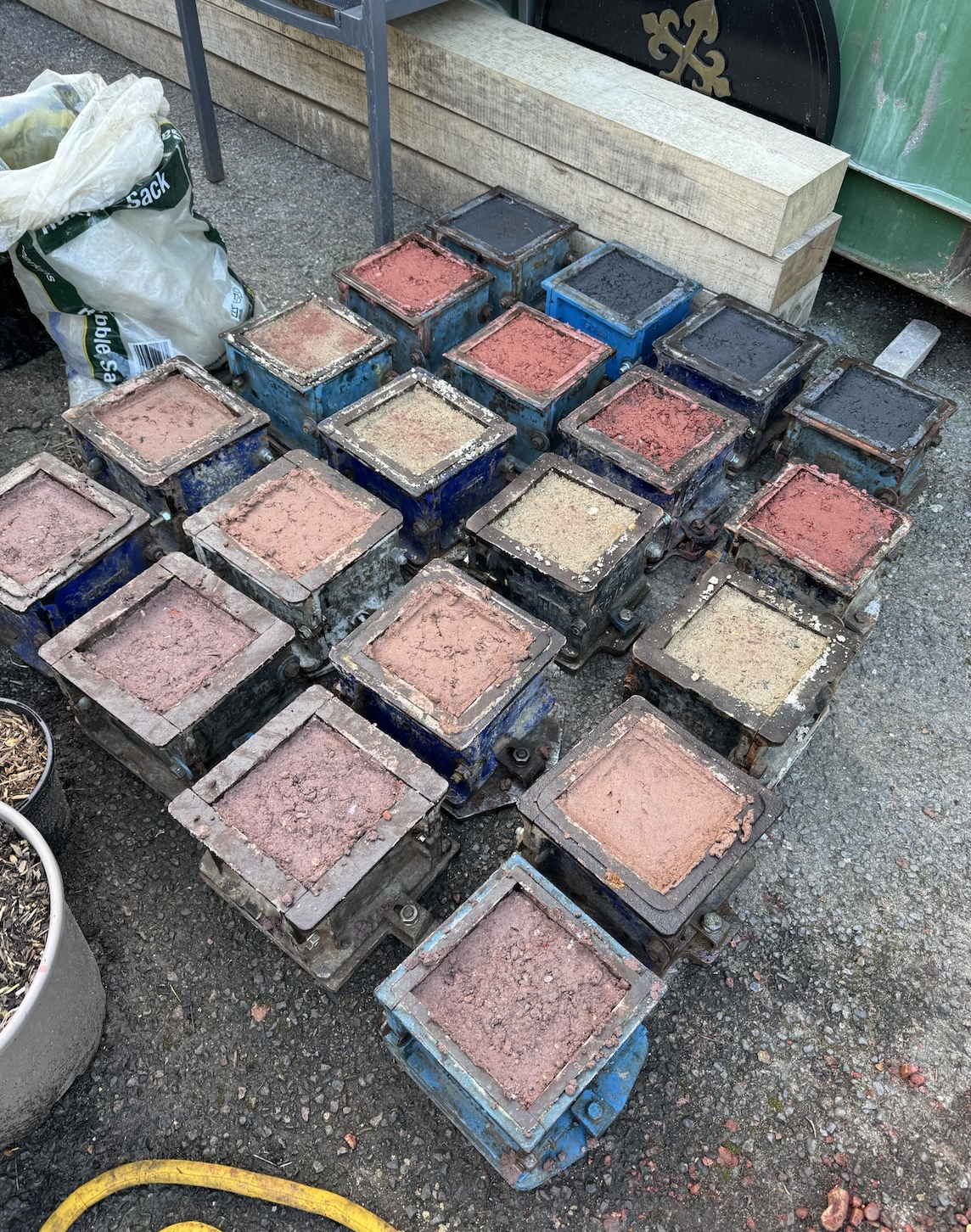
Rammed earth test blocks created with Acacia Gardens
HOW TO MAKE RAMMED EARTH STRUCTURE
Here is an outline of how we made an unstabilised rammed earth building, but the technique would be similar for other structures.
Once foundations are down and form work is built…
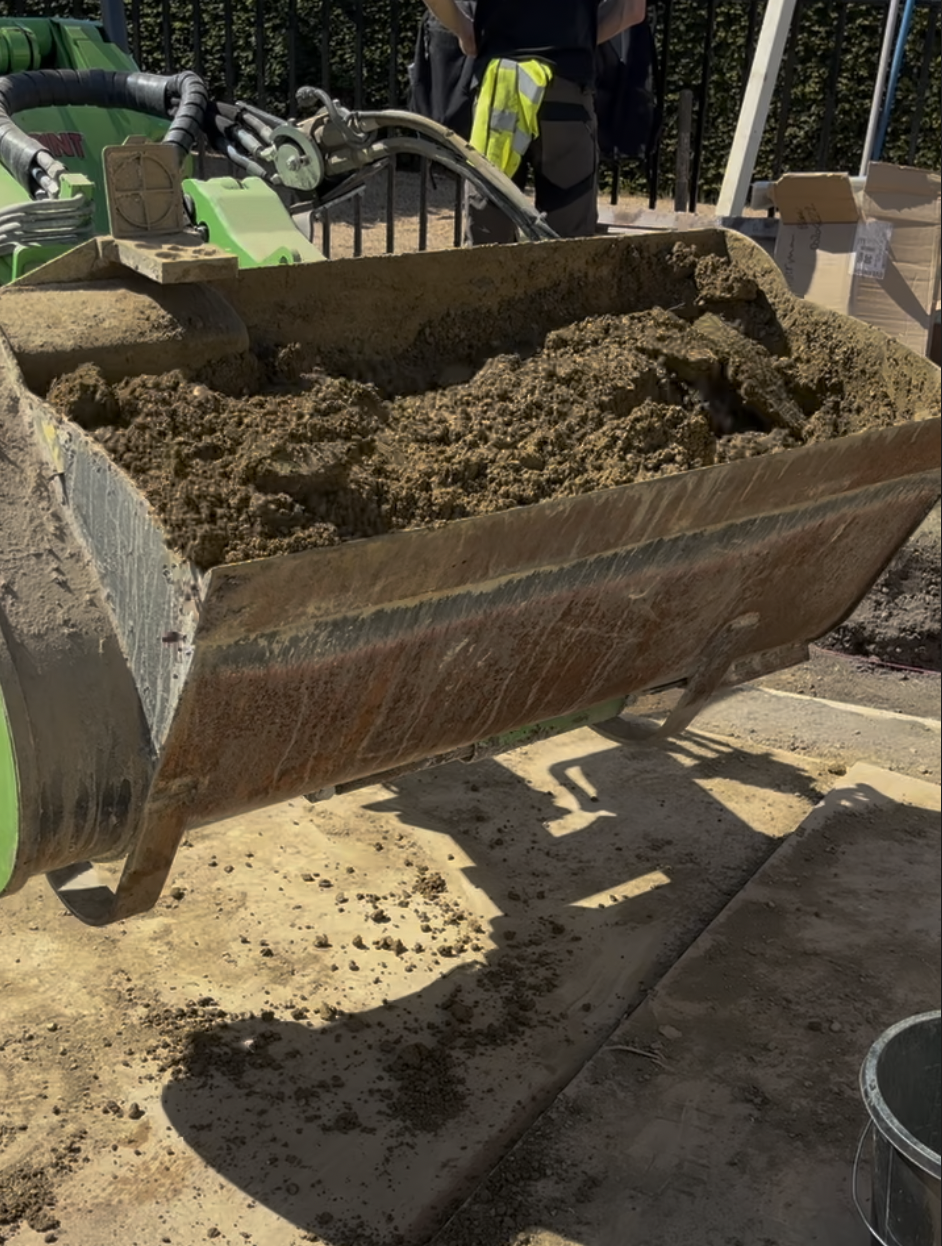
Approved rammed earth recipe mixed together.
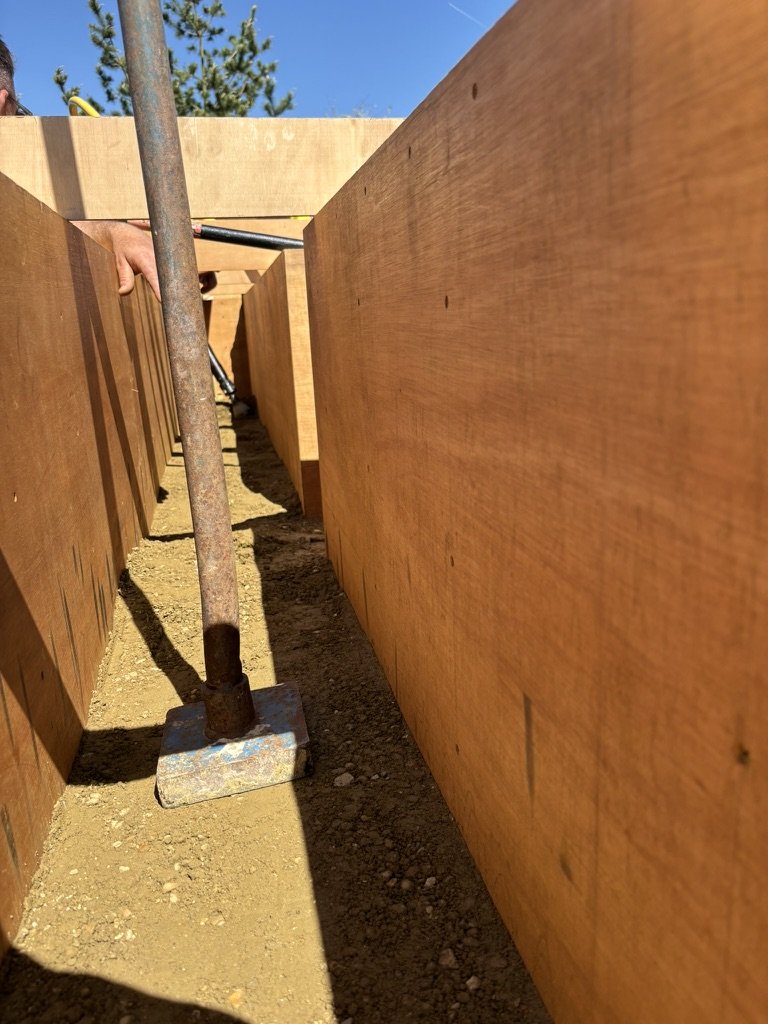
Tamped/ rammed into form work, you can create layers by changing the mix every few layers.
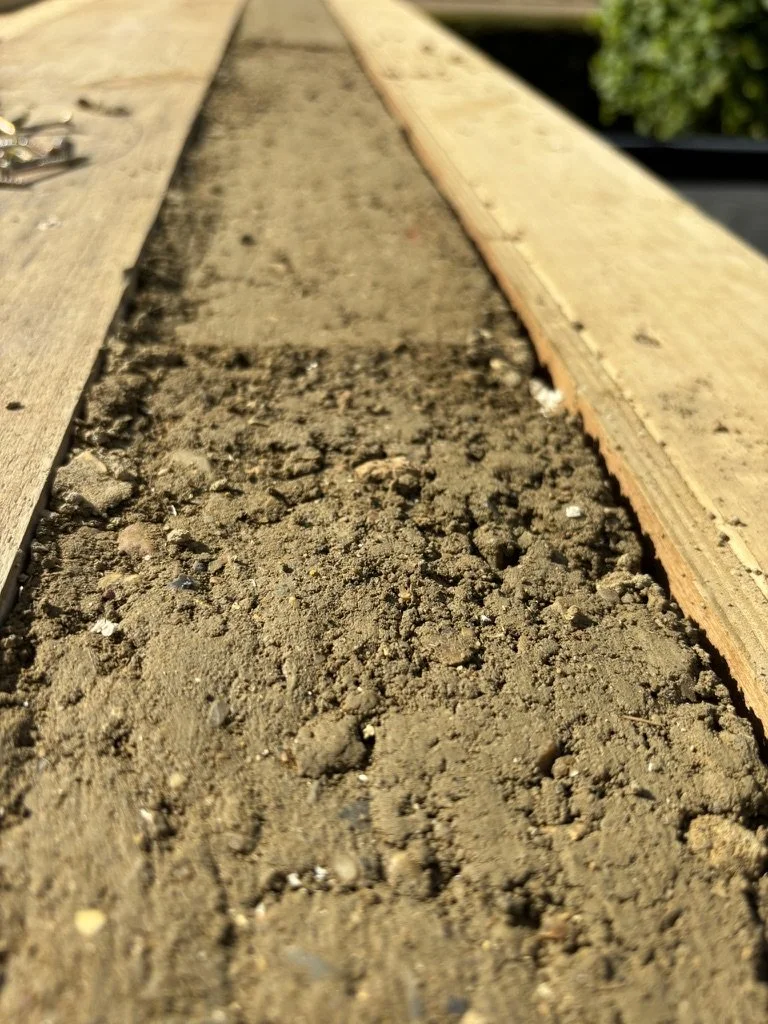
Filled to the correct heights
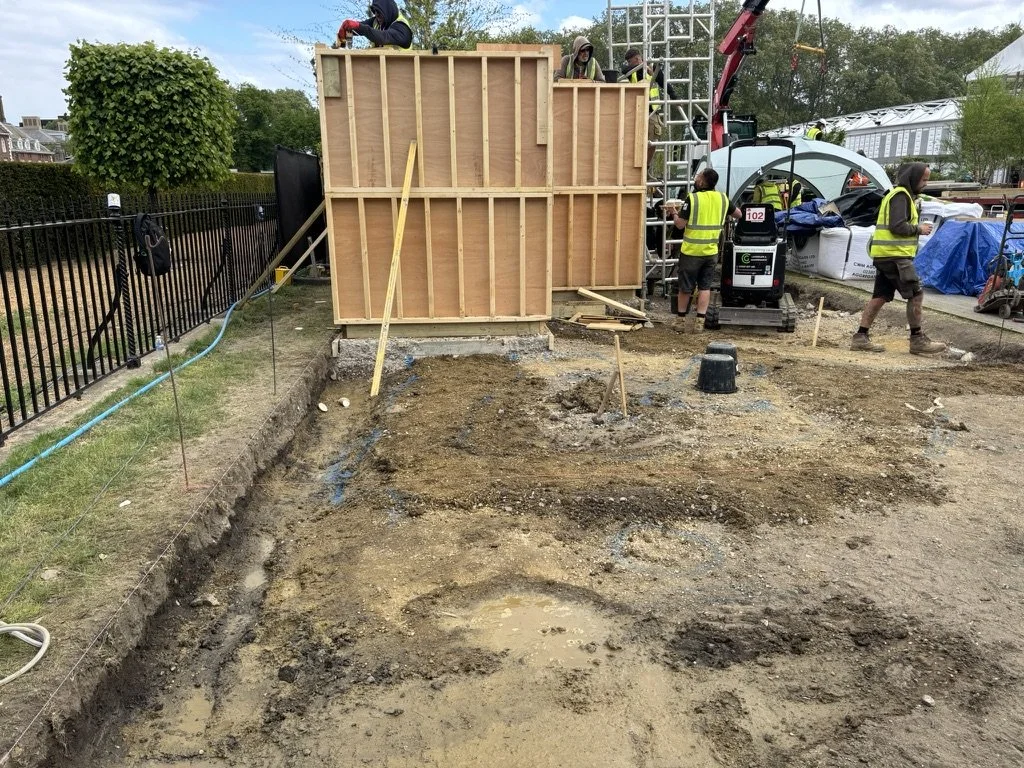
Wait for at least 24hrs then take shuttering off (weather dependant)
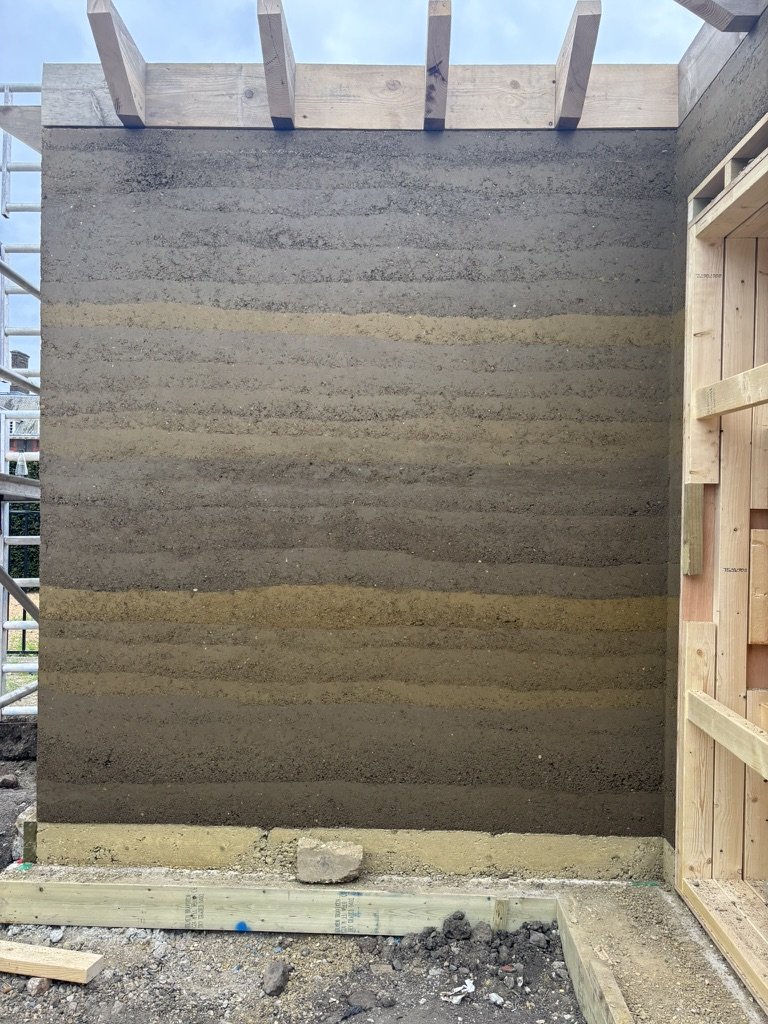
Once shuttering is off protect from rain
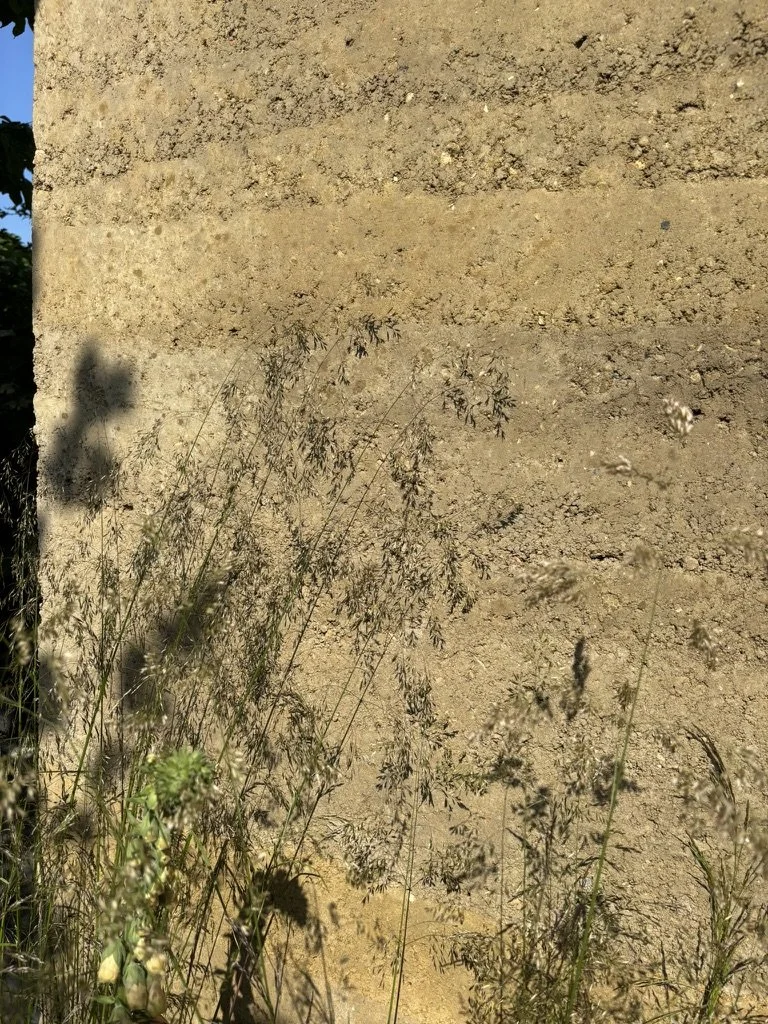
Once dry the final colour is ligher as the water is drawn out of the building.
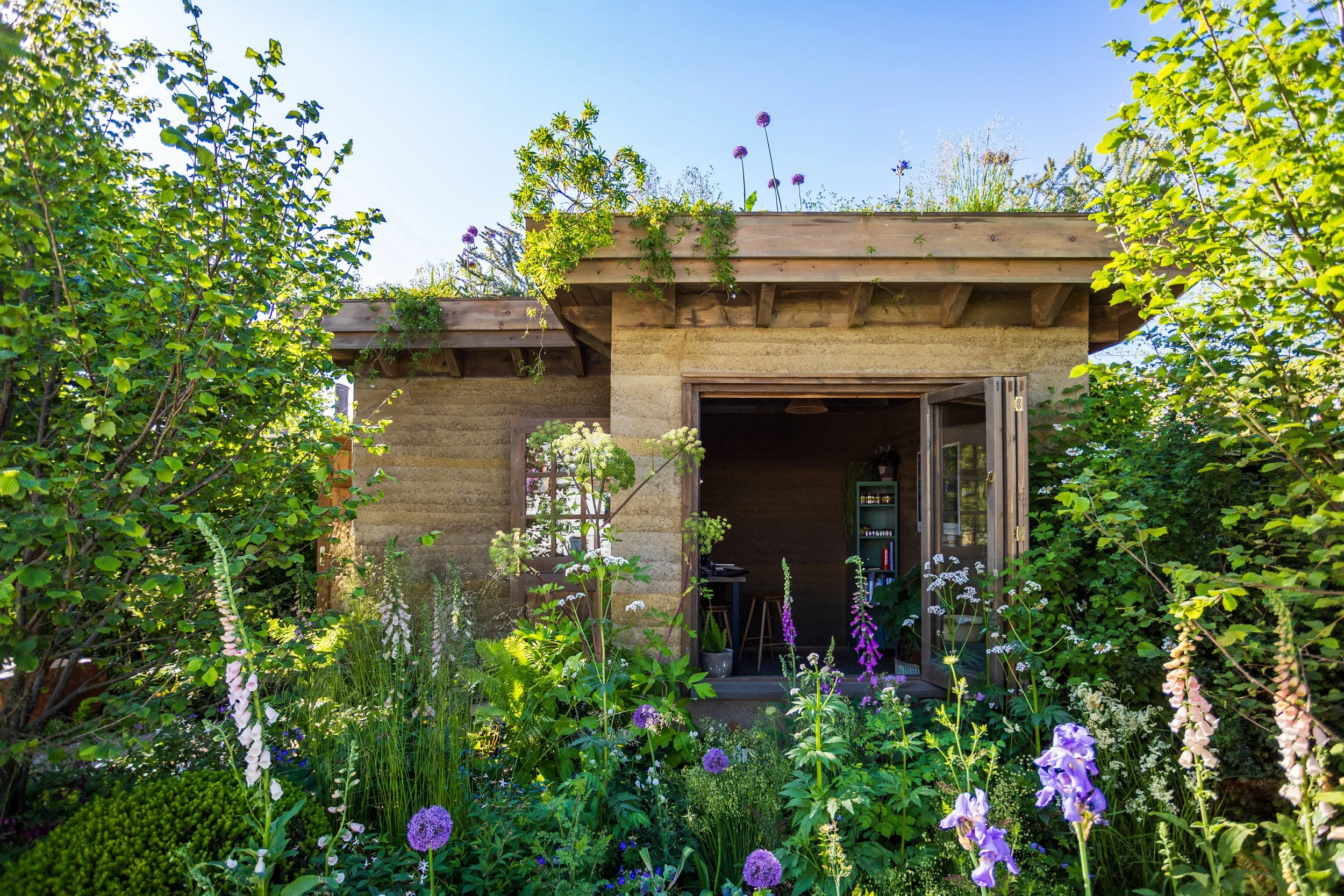
Garden of the Future at Chelsea flower show.
CAN YOU USE RAMMED EARH IN YOUR GARDEN?
Using rammed earth within your garden can be a fantastic feature for many reasons
Using excess soil from other building works, retaining it within the garden.
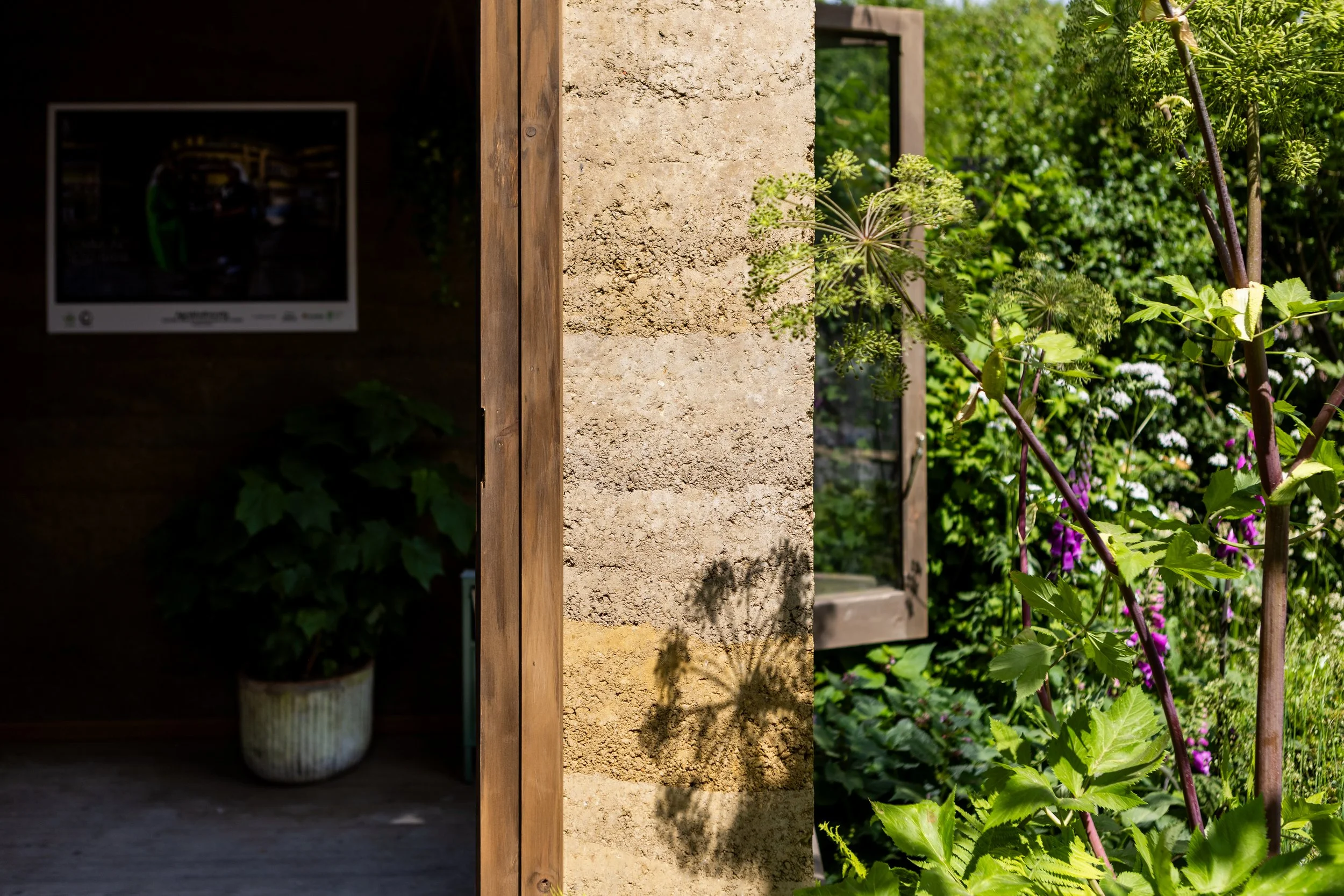
Unique textures and colour.
Good thermal mass and sound damping.
Strong compression strength.
If using unstabilised it can help support biodiversity such as mason bees.
Requires less/no cement compared to more conventional building techniques.
However you will need to consider that like many structures it should be protected from moisture, large over hangs (20-30cm+) often are required to prevent water hitting the building. It is also possible to use a water sealant but this will reduce some of the sustainable qualities of the process. Stabilised rammed earth will strengthen the structure and help with this but it does lower its sustainable credentials, closer to a concrete wall.
If you would like to use rammed earth within your garden there are simple ways you could add it in for example a bench, a low wall, a feature block.
WHAT IS THE CARE LIKE?
Like all structures, the lifespan of rammed earth can vary due to weather conditions, however tests have shown it can last beyond 60 years and with additional care and re-patching it can last longer. There are even sections of the great wall of China that where built from rammed earth.
However general care would include periodically checking for wear, damage and cracks or if moisture is getting in. addressing these (if appear) and then a simple general clean and then reseal if required. Stabilised rammed earth would be pretty much the same but more akin to a weak concrete block.
RECAP
2 types of Rammed earth - Stabilised (usually cement added) and un-stabilised (no cement added), choose the right one for your requirements
Test the mix you plan to use for strength and speak with structural engineer to make sure this is right for your project.
Create base/footing for the rammed earth
Layer in the mix to your form work, compact and repeat until you have the height required.
Remove shuttering
Add any additional elements such as overhangs/roofing/bench top etc
If you are interested in creating a sustainable garden using similar techniques, feel free to contact us - contact@butlerandparker.com | www.butlerandparker.com
This Project would not have been possible without
Structural engineer
Sarah Pellereau at Elliot Wood
Rammed earth Specialists
James Darlington, Clifton Schooley, Max Stadnky,
Landscapes:
Acacia Gardens, Mitch Salthouse (Everest landscapes), Aurum hortis, Glen and Jack copeland, Rob Woodhouse, Olive tree landscapes..
Landscape consultant
GK WIlson
Special thanks to
The Gates foundation for working with us on this project.
and Liz Nicholson for the encouragement to push this project using the elemental tool.